
Our Landscape
A gift of Nature
A geographical wonder, the Coonawarra landscape was forged over a million years, the result of Mother Nature weaving her stunning magic. Beginning under the waters of the Great Southern Ocean, today’s famous terra rossa soil – the essence of this winemaking region – is the slow and steady result of melting ice caps, seabeds forming into limestone, and winds blowing air-borne dust. And it all settled above an ancient reservoir of pure water.
The Crimson Earth: Terra Rossa
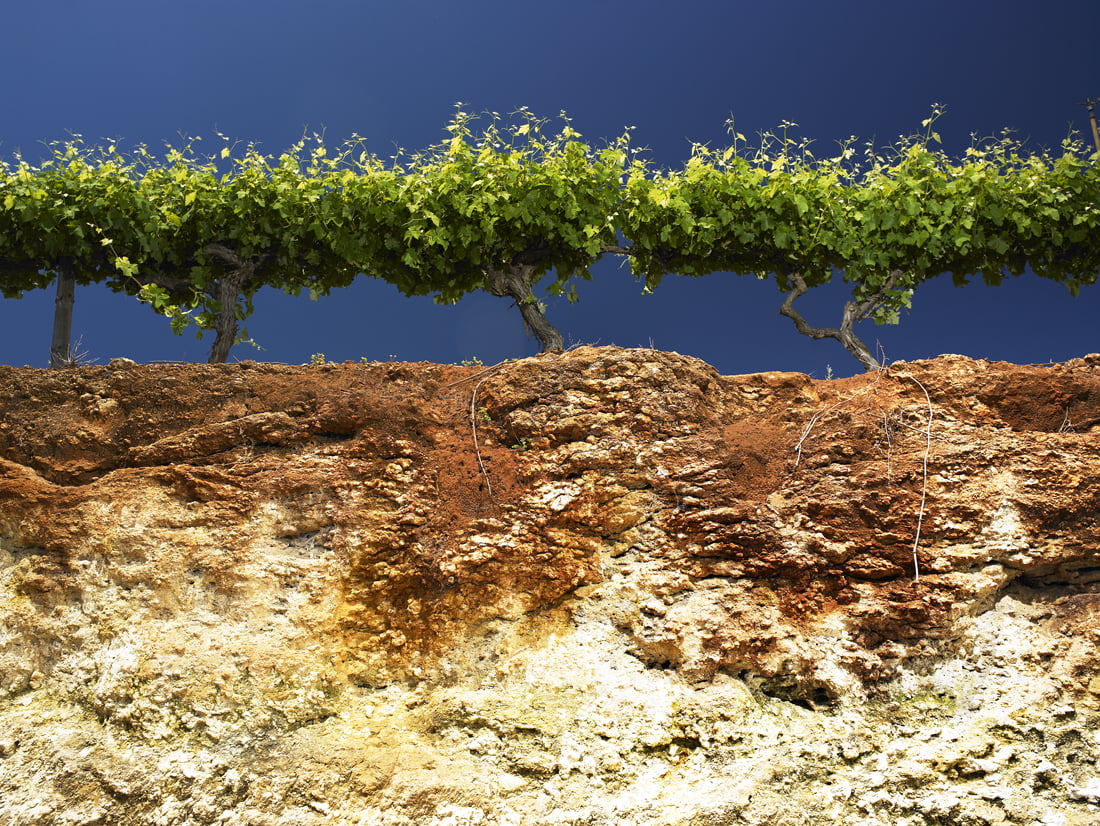
Cooawarra’s famed terra rossa soil is a unique, narrow ridge of earth, just 27 kilometres long and 2 Kilometres wide.
Its formation is a story told over millennia. It is a type of palaeosol, an ancient soil, created by the wind-blown dust of the arid interior settling on a bed of Miocene-era limestone. Over thousands of years, rainfall leached carbonates from this dust, leaving behind a concentration of iron oxides that have rusted to give the soil its vibrant crimson hue. This soil is remarkably shallow, often less than a metre deep, with a slightly alkaline pH.
Terra Rossa is Italian for red soil. It comprises a permeable light clay, averaging 50 centimetres depth over a limestone base, which allows water to drain freely, providing ample air and opportunity for the vine roots to explore and thrive. Vines growing in terra rossa have a natural balance of leaf and crop, with the grapes developing intense colours, varietal fruit flavours, and fine tannins as they ripen slowly in Coonawarra’s clear light, and cool climate.
This gift of Nature is impossible to engineer, yet the combination of the unique terra rossa soil with a long cool ripening season and a permanent supply of pure underground water from the limestone aquifer, makes Coonawarra eminently suited to growing the most perfect expression of “the King of Grapes” – Cabernet Sauvignon. Our distinctive terroir produces wines of immense distinction.
An Invisible Influence: Unique Cool Climate
Coonawarra’s climate is as critical as its soil.
Though the region sits at a modest latitude of 37 degrees south, it is significantly cooler than many expect. The secret is its proximity to the Southern Ocean and a powerful phenomenon known as the Bonney Upwelling.


Each summer, strong winds push surface water offshore, allowing frigid, nutrient-rich deep ocean water to rise. This natural air-conditioner creates cool, fog-free summer days and cold nights, providing a long, slow and mild ripening season, the holy grail for Cabernet Sauvignon.
This extended hang-time allows the grapes to develop complex flavours and full phenolic (tannin) ripeness without accumulating excessive sugar, resulting in wines with moderate alcohol levels and the fresh, vibrant acidity that is the backbone of their longevity.
As a recognised cool climate wine region, Coonawarra is one of the coolest places in Australia to ripen Cabernet Sauvignon – our grapes develop more complex flavours as a direct result of the longer ripening season and lower yields. And it’s one of the reasons why Coonawarra’s red wines have earned such international acclaim.
Seasonal Snapshot
In Winter (June, July, and August), Coonawarra has a daily average temperature of 9.8°C with rainfall dominating the season.
Vines are dormant during this season, making it the best time to prune. This task is overseen by viticulturists, carefully managing the process with an eye to the vine’s particular variety, age, row orientation, canopy formation and planned wine style. Hand-pruning to optimise vine leaf to fruit balance has been shown to improve wine quality, and is favoured by most Coonawarra vineyards. After pruning, severed canes are usually mulched and returned to the soil.
In Spring (September, October, and November), the warming soil temperatures encourage budburst in the vines; typically in the second week of September for white grapes such as Chardonnay, and in the third or fourth week for Cabernet Sauvignon. Likewise, flowering begins in late November, followed shortly after by fruiting. Spring is also a time when frosts must be closely monitored and prevented.
In Summer (December, January, and February), the warmer day time temperatures (averaging 18.8°C) assist in the eventual change in colour and softening of the berries. At this point, (known as ‘veraison’) the ripening berries will start accumulating sugars, flavour, colour and tannin, resulting in their readiness for harvesting.
While supplementary irrigation may be used, this is also the time when the terra rossa soil performs its magic, by regulating the water that the vines can access keeping the fruit small and concentrated. Flavour and colour potential of the final wines is further enhanced by the cool nights and long extended ripening period.
In Autumn (March, April, and May), vintage (or harvest) is in full swing. Vintage usually commences in the first or second week of February with white berries for sparkling wine, and late March or early April for Cabernet Sauvignon and other red grapes.
